


Blog
How to Create a Daily Yoga Routine at Home
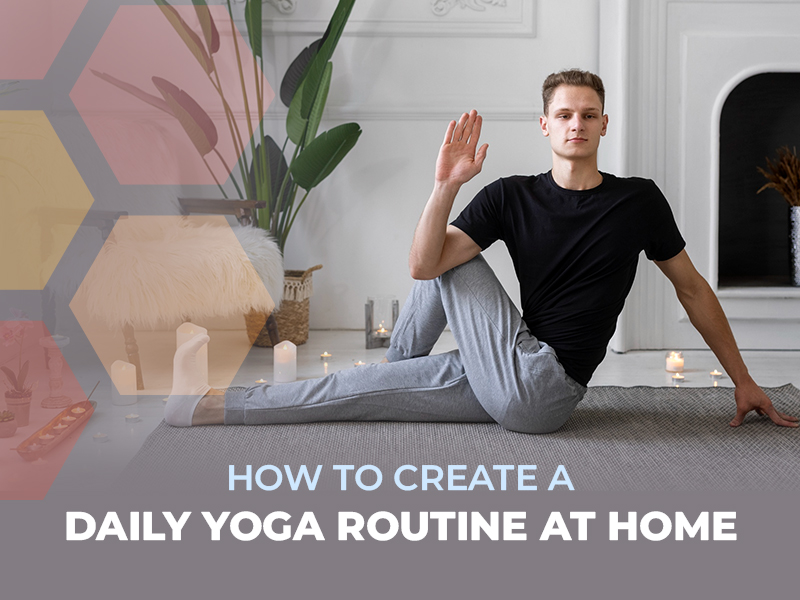
How to Create a Daily Yoga Routine at Home
A Simple, Sustainable Way to Build Strength, Flexibility, and Inner Calm
Practicing yoga at home can be one of the most effective habits you build for long term health. A daily routine that’s got nothing to do with having some fancy equipment, hours of free time or advanced poses – it’s all just about having the intent to do it, sticking to it consistently and having a structure that fits in with your lifestyle.
Whether your aim is flexibility, waking up less stressed, feeling stronger, sleeping better, or just generally feeling more balanced , this guide is gonna help you put together a yoga routine at home that is actually doable
lets get our mats out
Why are Daily Yoga Sessions so Good for You?
Daily yoga gives you a load of benefits that you just dont get from doing it once in a while:
- it helps keep your joints loose and your posture good
- it helps you relax and chill out
- it helps give you more muscle tone and balance
- it even improves you breathing
- you'll focus better and be in a better mood
- you'll get a much better nights sleep
- and you'll be more in tune with your body
Even just 10 – 20 minutes a day can make all the difference in the long run.
Step 1: Get Your Reason For Doing It Straight
Before you start designing your routine, get clear on why you actually want to practice – what you want to get out of it.
Ask yourself :
- Do you need some stress relief?
- or are you trying to get a bit more flexible?
- or build some more strength?
- Do you want to lose weight?
- do you want to get a better nights sleep
- or do you just need to calm down a bit more?
Your goal to an extent will shape the type and pace of your practice – so if you’re focusing on building strength you’ll probably be doing a lot more standing poses, whereas if you’re looking to just relax and chill you’ll want to focus on some of that breathing and gentle stretching stuff.
Step 2: Choose the Right Time of Day
There’s no single “best” time—only what you can commit to consistently.
Morning Yoga
Great for waking up the body and setting a calm, energized tone for the day.
Focus: Sun salutations, light backbends, hip openers, breathwork.
Afternoon Yoga
Ideal for breaking up sedentary workdays.
Focus: Mobility, posture resets, spinal twists, gentle flows.
Evening Yoga
Perfect for winding down and preparing for sleep.
Focus: Slow stretches, forward folds, restorative poses, long exhales.
Pick a time that naturally fits into your schedule—consistency matters more than timing.
Step 3: Set Up Your Home Practice Space
You don’t need a full studio—just a small, quiet corner.
Create a calming environment:
- A yoga mat or non-slip surface
- Enough space to stretch your arms and legs
- Soft lighting or daylight
- Comfortable temperature
- Optional: candles, plants, or calming music
Keep your mat visible so it reminds you to practice.
Step 4: Decide How Long to Practice
Start small to build momentum.
- Beginner: 10–15 minutes
- Intermediate: 20–30 minutes
- Advanced: 40–60 minutes
It’s better to practice briefly every day than long sessions once in a while.
Step 5: Structure Your Daily Yoga Routine
A balanced home routine usually includes five simple sections:
1. Centering & Breathwork (2–5 minutes)
Sit or lie comfortably and focus on slow, deep breathing.
Try:
- Inhale for 4 counts, exhale for 6
- Belly breathing
- Gentle neck rolls
- This shifts your nervous system into a calmer state and prepares you mentally.
2. Warm-Up (3–5 minutes)
- Gently mobilize joints and muscles.
Include:
- Cat–Cow
- Neck and shoulder rolls
- Hip circles
- Seated twists
- Arm swings
- Warm muscles move more safely and deeply.
3. Flow or Strength Sequence (8–20 minutes)
This is the heart of your practice.
Mix poses like:
- Sun Salutations
- Downward Dog
- Warrior I & II
- Chair Pose
- Plank
- Crescent Lunge
- Triangle Pose
Move slowly with your breath—inhale to lift or lengthen, exhale to fold or deepen.
4. Cool-Down Stretches (3–7 minutes)
Slow things down to relax the body.
Try
- Seated forward fold
- Pigeon or figure-four
- Butterfly pose
- Supine spinal twist
- Happy baby
- These poses release tension built during movement.
5. Relaxation or Meditation (3–5 minutes)
End in Savasana (lying flat) or seated meditation.
- Focus on:
- Body scanning
- Gratitude
- Slow breathing
- Letting go of the day
- Never skip this—relaxation is where your nervous system resets.
Sample 20-Minute Daily Home Routine
- 2 min – Breath awareness
- 4 min – Cat–Cow, spinal rolls, shoulder openers
- 10 min – Sun salutations + Warriors + Lunges
- 3 min – Hip stretches and forward folds
- 1 min – Savasana
Simple, effective, and doable.
Step 6: Keep It Beginner-Friendly
If you’re new:
- Modify poses with blocks or pillows
- Bend your knees when needed
- Skip painful movements
- Move slowly
- Rest often
Yoga is not about forcing shapes—it’s about listening to your body.
Step 7: Build the Habit (Not Just the Routine)
Consistency comes from systems, not motivation.
Try:
- Practicing at the same time daily
- Linking yoga to another habit (after brushing teeth, before bed)
- Laying out your mat the night before
- Using short online videos when busy
- Tracking streaks on a calendar
- Celebrating small wins
Some days will feel amazing. Others won’t—that’s normal. Show up anyway.
Common Mistakes to Avoid
- ❌ Trying to do too much too soon
- ❌ Comparing yourself to others online
- ❌ Skipping warm-ups
- ❌ Holding your breath
- ❌ Being inconsistent
- ❌ Pushing through pain
Progress comes from patience.
Adjusting Your Routine Over Time
As your body adapts, evolve your practice:
- Add longer flows
- Introduce balance poses
- Try strength-based yoga
- Increase meditation time
- Rotate between slow and energetic days
Think of your routine as a living system—flexible and responsive.
Final Thoughts
Having a daily yoga routine at home is easily one of the best ways to actually take care of yourself on a regular basis.
Remember:
- Don't overcomplicate things - keep it simple to start
- Begin with a manageable routine
- Stick to it, you'll get into a rhythm
- Move in sync with your breath, it makes a difference
- Don't be afraid to change things up when you need to
- Just have fun with it, enjoy the journey
Yoga isn’t about being a superstar – at the end of the day it’s about just being present in the moment.
Give it a Go
Ready to make yoga a part of your daily routine? Head on over to our blog for plenty more ideas for home practice flows and a ton of mindfulness tips to help you get started – and don’t worry if it all doesn’t come together right away, just take it one step at a time.